
Lake Simcoe buyer’s guide
How to Choose a Lake Simcoe Waterfront Home
Start with how you will use the water, not with the house. Lake Simcoe shorelines differ in bottom, depth, direction and exposure, sometimes within a single bay, so the right property is the one whose water matches the way you want to live on it.
Bill Jackson, CLHMS · Sales Representative · eXp Realty, Brokerage
Start with the water
Lake Simcoe is sandy in places, rocky in others, and rocky shoreline often transitions to sand a little farther out. Some stretches are weedy and mucky. Some bays have all three, and the bottom can change within a single bay. On the stretch of Barnstable Bay I know best, the shore is mainly rocky, but on the far side of a shoal the bottom turns soft and mucky, and in the corner of the bay I have seen a large weed bed in the shallows. Two properties a short distance apart can give you very different water, and they suit different uses. On the rocky part of the stretch I know, the shoreline is solid to walk in from, and water socks are no big deal if you swim there. A weed bed is a different kind of water: if you like to fish, I know it as a good area for it. Which suits you depends on how you use the water, and any entry is worth checking in person.
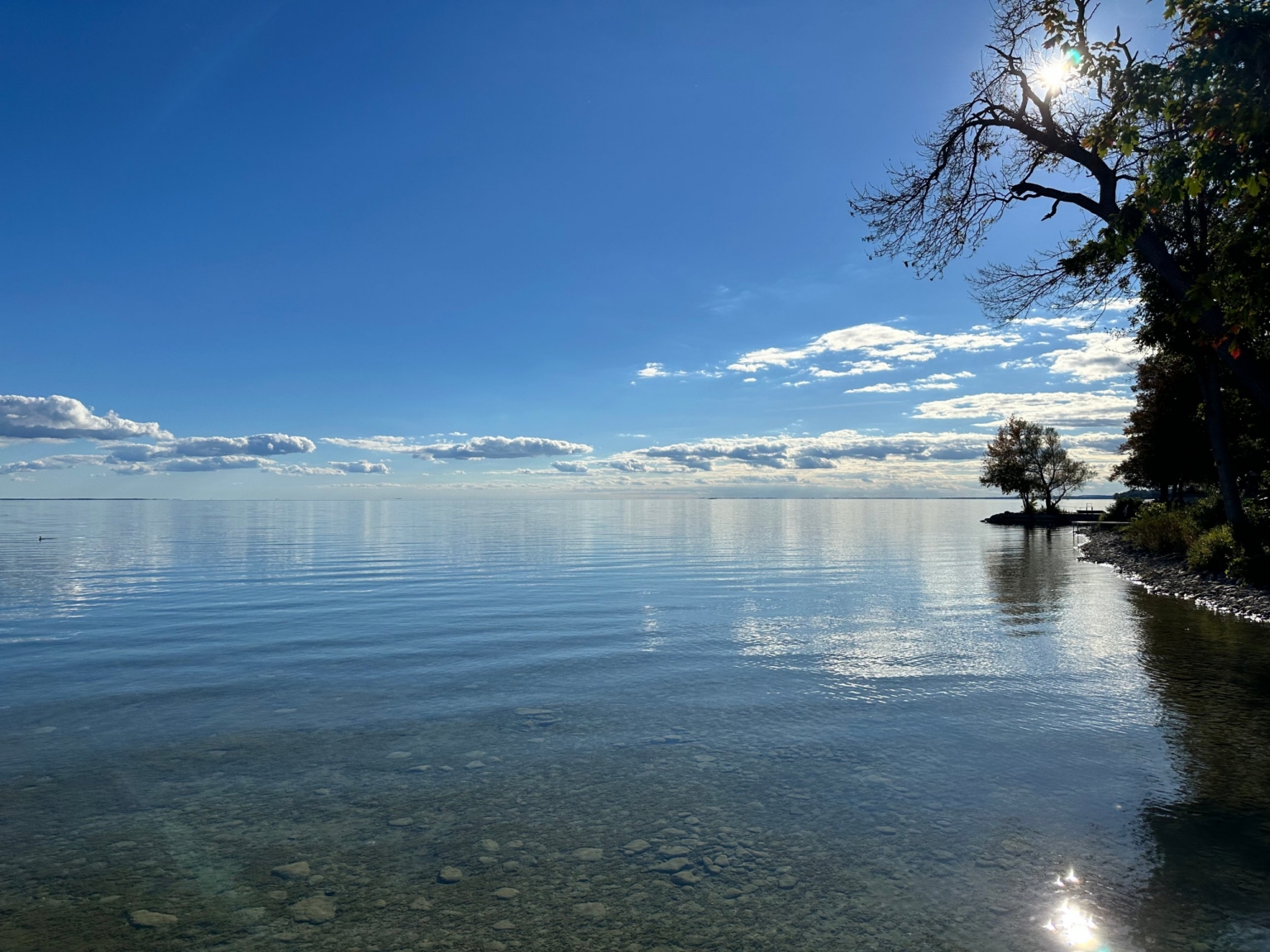
If boats matter, ask about depth early. On some parts of the shore the approach is shallow, and whether a particular boat can reach the dock depends on the boat, the depth on the approach, the bottom and the time of year. A lift may help. Depending on the shoreline, it may have to go farther out later in the year, when the water is lower, so treat it as a question for each property and not a general fix. One visit shows you that day’s water, so ask how the dock behaves late in the season.
Then decide what you want from the setting
What I look for depends on the buyer, so I begin with these questions. Each one points to something specific to check on the ground.
| If you want | Ask about |
|---|---|
| Deep water for boats | Depth at the dock and on the approach, lift placement, and how both change later in the season |
| Sunsets, sunrises or all-day sun | Which way the frontage faces, and what stands between the house and that light |
| A lively waterfront or a quiet one | How much boat traffic passes the property |
| Shelter or open water | Whether the lot is protected or fully exposed to the wind |
| A panoramic view or a more limited one | What the view looks like from the living space, not only from the dock |
| A boathouse | Whether the property has one. Boathouses are a more limited resource, and not every Simcoe waterfront has one. Whether an existing one is approved, and what it may be used for, are separate questions |
Suitable water is not the same as permission
A good shoreline does not settle what you may do with it. Having a boathouse does not establish that it is approved. Suitable water does not establish who owns the shore, or your right to install or alter a dock. For the property you are considering, ask for the documents, and ask the municipality, the conservation authority and your lawyer what applies to it.
Verify what sits behind the shoreline
Whatever the shoreline, I check two things on every purchase.
- Drinking water. Is it municipal, drawn from a well, or drawn from the lake itself? If it is a well or the lake, I look at the treatment system and have the drinking water tested. Bacterial testing for E. coli and total coliform is free through Public Health Ontario’s laboratory, and your local health unit can tell you where to pick up bottles and drop off samples. A private laboratory licensed for drinking-water testing can do that and more, including minerals and chemistry, for a fee. When I read a bacterial result, I am looking for zero for both. A clean result means neither E. coli nor total coliforms were detected in that sample on that day. It says nothing about chemical or mineral contaminants, and it is not a guarantee of ongoing quality. Testing quality also does not tell you whether the supply is enough for how you will use it, so ask the appropriate professional what the well or intake can deliver.
- Sewage. Is it septic or municipal sewer? If it is septic, I recommend an inspection, and in my experience the tank is generally pumped out before closing. Who pays for each is agreed in the particular transaction. I generally see the buyer pay for the inspection and the seller for the pump-out. A pump-out is not an inspection: the person pumping may look over the tank and lids, but that does not replace an inspection of the system.
Why I begin with questions
Each area of the shore is unique, and that is what makes lake living so appealing. It is also why I would rather learn how you want to use the water before I show you a property. Luxury is not just a price point. It is a service level, and for me that starts with knowing which shoreline fits you.
For a closer look at one stretch of the shore, with sold and active figures for Orillia and Ramara, see Buying on the North Shore of Lake Simcoe. Dated, sourced sold figures for Lake Simcoe by area are collected on Lake Simcoe Facts.
Start a private conversation
Tell me how you want to use the water, and I will tell you where on Lake Simcoe I would look first.
Common questions
Can I keep a boat at a Lake Simcoe waterfront home?
Often, but it depends on the boat and the water in front of the property. A lift does not establish that a boat can reach it, and where one should sit needs a look at that property. Where the approach is shallow, it may have to go farther out later in the year, when the water is lower. Check the depth on the approach and at the dock, and ask about late-season depth and usable access.
Should the septic system be inspected before buying a waterfront home?
I recommend it. A pump-out is not an inspection: the person pumping may look over the tank and lids, but that does not replace an inspection of the system. Who pays for each is agreed in the particular transaction.
How should drinking water be checked on a waterfront property?
For a well or a lake supply, I look at the treatment system and have the drinking water tested. Bacterial testing (E. coli and total coliform) is free through Public Health Ontario’s laboratory, and your local health unit can tell you where to pick up bottles and drop off samples. A private licensed laboratory can test for more, including minerals and chemistry, for a fee. A clean bacterial result means neither E. coli nor total coliforms were detected in that sample on that day. It says nothing about chemical or mineral contaminants, or about whether the supply is enough for your use.
Sales Representative · Lake Country Real Estate Team · eXp Realty, Brokerage
Last reviewed: 10 October 2026